



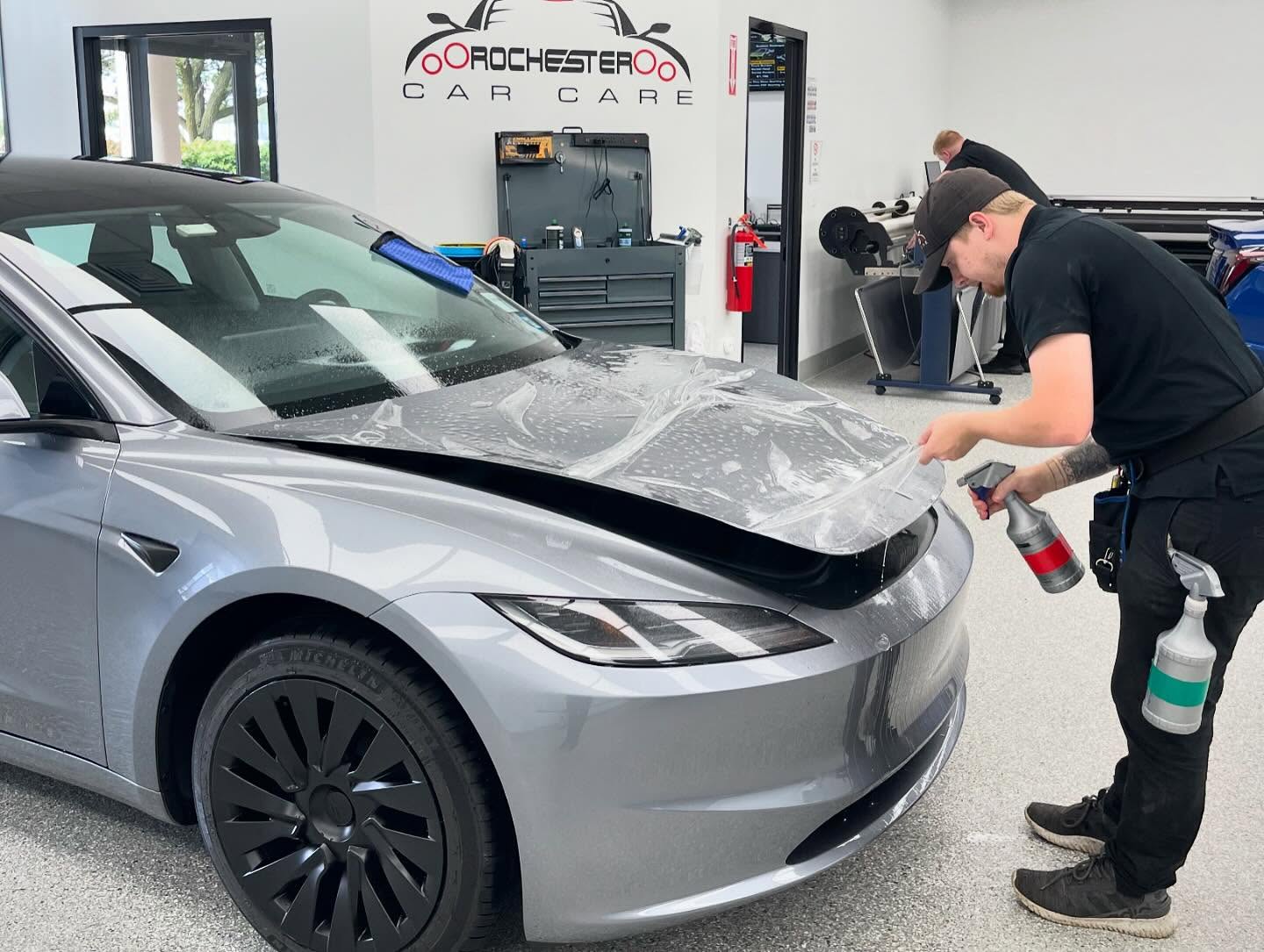
Winter in Rochester brings more than just snow. Salt-covered roads and constant slush exposure can wreak havoc on your vehicle’s paint protection film (PPF). Your PPF acts as a shield, but it needs proper care during these harsh months to keep performing at its best.
Let’s get into how you can protect your investment and keep your PPF looking pristine all winter long.
Why Winter Is Tough on Paint Protection Film
Rochester winters are brutal on cars. The combination of road salt, ice melt chemicals, and freezing temperatures creates a perfect storm for vehicle damage.
PPF is designed to handle a lot. But winter conditions test even the best protective films. Road salt contains corrosive elements that can degrade the film’s adhesive properties over time. Slush carries abrasive particles that scratch and dull the surface. And those freeze-thaw cycles? They can cause the edges of your film to lift if moisture gets underneath.
The good news is that with proper winter maintenance, your PPF can handle everything Rochester weather throws at it.
Regular Washing Is Your Best Defense
You might think winter is a bad time to wash your car. Actually, it’s the most important season for regular cleaning.
Road salt doesn’t just sit on your paint protection film. It actively works against it, eating away at the protective barrier if left too long. Try to wash your vehicle every 7-10 days during the winter months.
- Use touchless car washes when temperatures are above freezing
- Choose pH-neutral car soap designed for PPF
- Focus on the lower panels where salt accumulation is worst
- Rinse thoroughly to remove all chemical residue
- Dry completely to prevent water spots and freezing
But here’s the thing. Not all car washes are PPF-friendly. Avoid brush-style automatic washes that can catch on film edges and cause peeling.
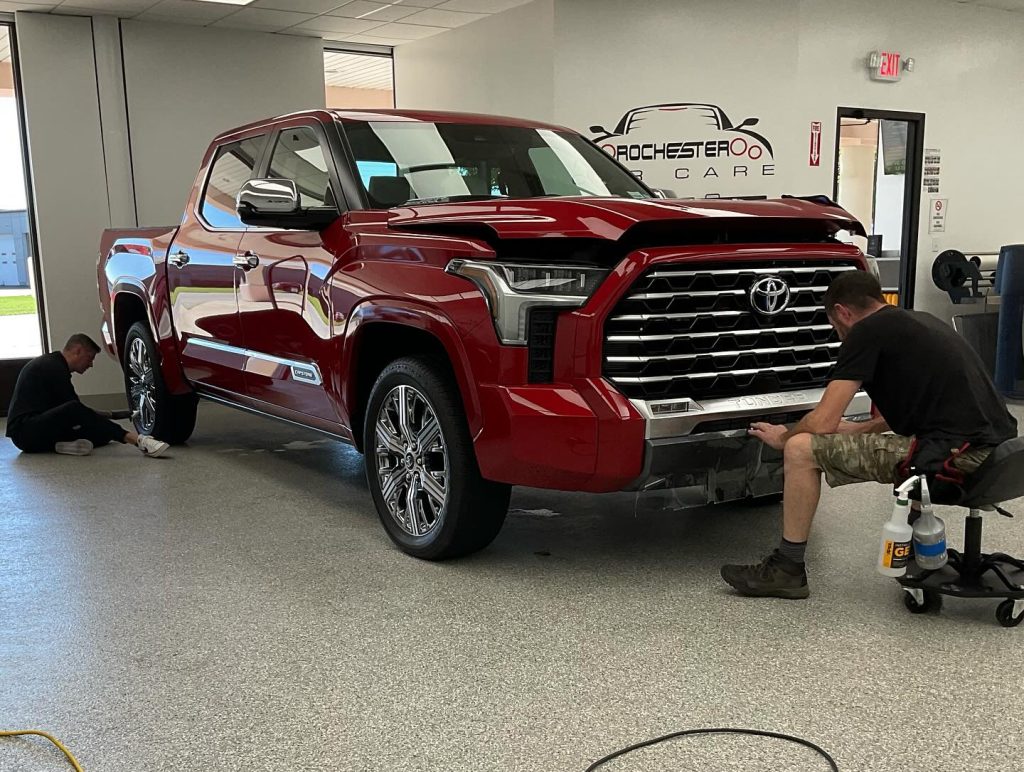
The Right Products Make All the Difference
Using the wrong cleaning products can damage your PPF faster than winter weather alone.
Harsh chemicals and abrasive cleaners strip away the film’s protective top coat. This leaves the underlying material vulnerable to staining and yellowing. Stick with products specifically formulated for paint protection film or at least labelled as safe for clear coats.
- pH-neutral car shampoos
- Microfiber wash mitts and drying towels
- Ceramic coating spray boosters for PPF
- Dedicated PPF cleaners
- Isopropyl alcohol for stubborn salt stains
And don’t forget about your washing tools. Dirty sponges and towels can trap salt crystals and sand, turning them into sandpaper against your film.
Protect Those Vulnerable Edges
The edges of your PPF are where winter damage typically starts.
When water and salt get under lifted edges, they freeze and expand. This pushes the film further away from the paint. Before you know it, you’ve got significant lifting that requires professional repair.
Inspect your film edges monthly during winter. Look for any signs of lifting, especially around door handles, mirrors, and front bumper areas. If you spot problems early, a quick trip to your PPF installer can prevent bigger issues.
Apply a thin layer of sealant or ceramic coating along the edges. This creates an extra barrier against moisture penetration.
Temperature Matters for PPF Care
Cold temperatures change how paint protection film behaves.
The film becomes less flexible when it’s freezing outside. This makes it more susceptible to cracking if impacted by road debris. It also means you need to be gentler during washing and drying.
Never wash your car when temperatures are below 32°F if you can help it. The water can freeze in seams and under film edges. If you must wash in cold weather, do it in a heated bay and dry the vehicle completely before taking it back outside.
Park in a garage whenever possible. Even an unheated garage provides some protection from the extreme temperature swings that stress PPF adhesion.
Don't Skip the Undercarriage
Most people forget about the undercarriage. But salt accumulation underneath your vehicle can cause problems for lower PPF sections.
That salt spray doesn’t just hit the visible parts of your car. It coats the wheel wells, rocker panels, and lower doors. These areas often have PPF coverage on luxury vehicles and sports cars.
Undercarriage care tips:
- Use car washes with undercarriage spray options
- Hose down wheel wells after driving in heavy salt
- Inspect lower PPF sections for damage
- Remove packed snow and ice from wheel wells regularly
- Isopropyl alcohol for stubborn salt stains
The investment in undercarriage washing pays off. You’ll extend the life of your PPF and prevent rust on the unprotected areas.
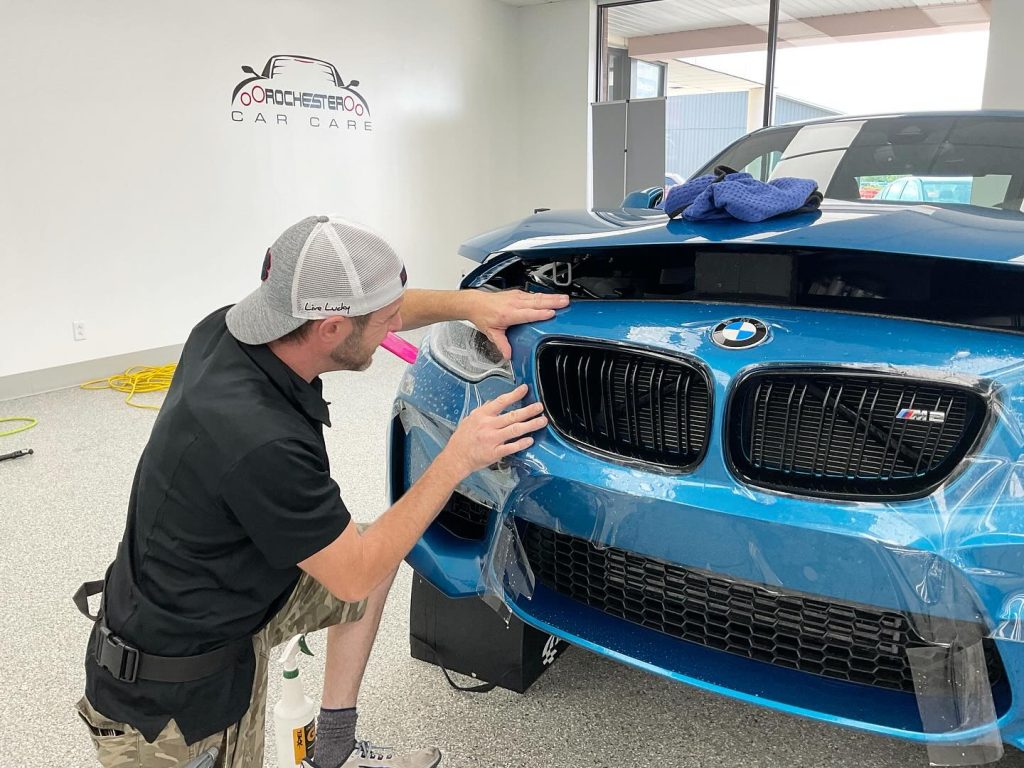
Wax and Sealants Still Work
Some people think PPF doesn’t need additional protection. They’re wrong.
Applying a quality sealant or ceramic coating over your paint protection film adds another defensive layer. These products help water and salt slide off more easily. They also make washing more effective because contaminants don’t bond as strongly to the surface.
Reapply sealant every 2-3 months during winter. The harsh conditions break down these protective layers faster than the summer sun does.
Watch for These Warning Signs
Knowing when your PPF needs professional attention can save you money.
Look for yellowing or discoloration, especially on white or light-colored vehicles. Check for excessive scratching that doesn’t self-heal. Notice any bubbling under the film or significant edge lifting.
These issues won’t fix themselves. Winter will only make them worse. Schedule a professional inspection if you spot problems.
Get Professional PPF Maintenance at Rochester Car Care
Your paint protection film deserves expert care, especially during Rochester’s harsh winters.
At Rochester Car Care, we specialize in maintaining and repairing PPF for all vehicle types. Our team knows exactly how winter weather affects protective films and what it takes to keep them performing perfectly.
We offer comprehensive PPF maintenance services, including professional cleaning, edge sealing, ceramic coating application over film, and damage assessment. Contact Rochester Car Care today to schedule your winter PPF inspection and maintenance service.